Who needs an Arizona contractor license
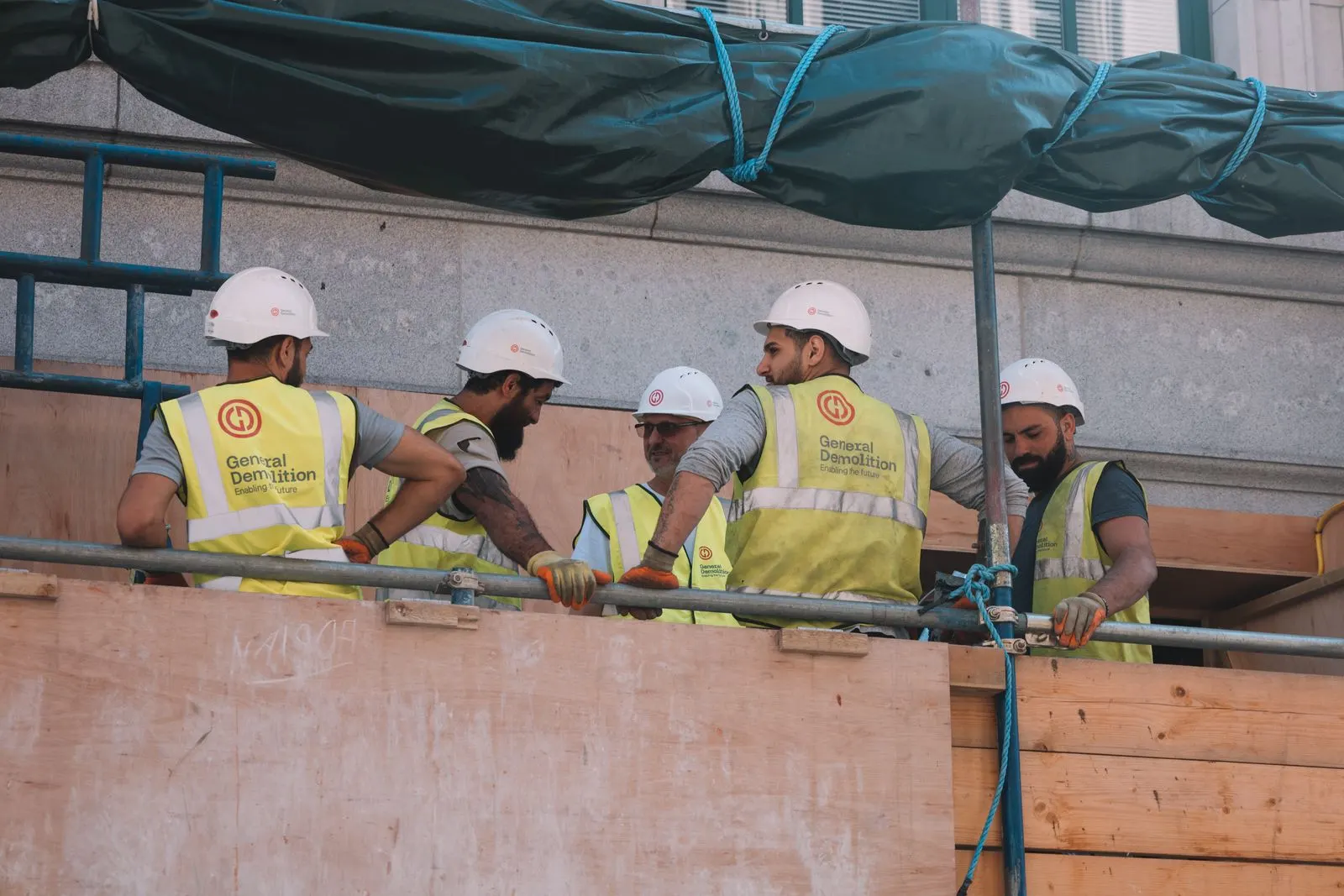
Arizona licenses contractors at the state level through the Arizona Registrar of Contractors. You need a license to build, alter, repair, add to, improve, move, wreck or demolish any building or other structure, or to do any part of that work. Subcontractors, floor covering and hardscape contractors, and consultants who manage a project for an owner are all included.
You must be licensed before you submit a bid. The license is issued to a business (sole proprietorship, partnership, LLC or corporation), not to a person. It belongs to the business and cannot be transferred to a new owner, with a limited exception for corporations and LLCs whose Corporation Commission file number stays the same.
Everyone named on the application must be at least 18. An LLC or corporation must be registered with the Arizona Corporation Commission and in good standing before it applies, and must stay in good standing to renew.
The handyman exemption: the $1,000 line
Arizona's handyman exemption is in A.R.S. 32-1121, paragraph A.14. It lets an unlicensed person take a job only when all of these are true. The ROC's own short version is: if labor and materials reach $1,000, or a permit is required at any price, you need a license.
- The total contract price for the whole project, labor and materials together, is less than $1,000.
- The work is casual or minor in nature.
- The work does not require a local building permit.
- The job is not one piece of a larger project split up to stay under the limit.
License types: residential, commercial and dual
The ROC issues three types of license. Residential work means houses, townhouses, condos, cooperative units and anything on or within residential property lines. Commercial is everything else. A dual license covers both under one license.
The letter at the front of the classification tells you the type. A and B-1 or B-2 are commercial general classes. B, B-3, B-4, B-5, B-6 and B-10 are residential general classes. C classes are commercial specialty, R classes are residential specialty, and CR classes are specialty dual. KA, KB-1 and KB-2 are general dual classes.
The type also drives your fees, your bond and whether you pay into the Recovery Fund. Pick it based on the work you will actually do. A residential-only license does not let you build a store, and a commercial-only license does not let you remodel a house.
See where you stand in 10 minutes
Take the free Arizona SRE practice test. 15 questions, every answer explained.
Common general classifications
Most general contractors apply for one of the classes below. The ROC's license classifications page has the full scope for every class, including the specialty R, C and CR trades. General classes must subcontract electrical, plumbing, air conditioning, boilers, pools, spas and water wells to properly licensed contractors.
| Class | Type | What it covers | Minimum experience |
|---|---|---|---|
| B General Residential | Residential | Build and repair all or any part of a residential structure or appurtenance | 4 years |
| B-3 General Remodeling and Repair | Residential | Remodel and repair existing residential structures, includes R-7 carpentry scope | 4 years |
| B-1 General Commercial | Commercial | Build, alter and repair any commercial structure, any project size | 4 years |
| B-2 General Small Commercial | Commercial | New commercial structures and additions, projects of $2,000,000 or less | 4 years |
| KB-1 Dual Building | Dual | B-1 commercial scope plus B residential scope | 4 years |
| KB-2 Dual Residential and Small Commercial | Dual | B-2 small commercial scope plus B residential scope | 4 years |
Qualifying party and experience requirements
Every license needs a qualifying party. This is the person whose experience and exam results qualify the business. The qualifying party can be the sole proprietor, a partner, an LLC member, a corporate officer, or a regularly employed employee who is actively engaged in the licensed work.
Under A.R.S. 32-1122, the qualifying party generally needs at least four years of practical or management trade experience in the type of work being licensed, with at least two of those years within the last ten years. Up to two years of accredited technical training can count toward the four years. Many specialty classes require less than four years, so check the ROC's License Classification Requirements form for your class.
A person can act as qualifying party for one additional licensed business only in limited cases, such as at least 25% common ownership between the two businesses, under A.R.S. 32-1127.
The exams: Statutes and Rules plus a trade exam
The qualifying party must pass the required exams with a score of at least 70%. Almost every classification requires two: the Arizona Statutes and Rules Training Course and Exam (SRE), and a trade exam for the classification.
The SRE is an open-book, computer-based training course and exam offered only online through Gmetrix. The fee is $61, paid to Gmetrix. It covers the Arizona contractor statutes (Title 32, Chapter 10) and the ROC's rules. Open book does not mean easy, so working through Arizona Statutes and Rules practice questions first helps you learn where answers live. The SRE cannot be waived unless the proposed qualifying party has been a qualifying party on an Arizona license within the past five years.
Trade exams are given by PSI, online or at a testing center, for $66. The B, B-3 and CR-61 classes share one combined trade exam. The B-1, B-2, KB-1 and KB-2 classes share another. Content outlines and approved references are in the PSI Candidate Information Bulletin. Check the bulletin for current details before you book.
Using the NASCLA exam instead of the Arizona trade exam
Arizona accepts the NASCLA Commercial General Building exam in place of the AZ ROC trade exam for the commercial and dual building classes. The ROC fee page lists B-1, B-2, KB-1 and KB-2. The NASCLA exam fee is $106, plus a separate fee paid to NASCLA so the ROC can see your results. You still have to pass the Arizona SRE.
NASCLA makes sense if you plan to work in other states that accept it. It is a long, reference-heavy exam, so timed practice with NASCLA Commercial General Building practice tests is a good way to check your speed with the books.
Electrical applicants for R-11, C-11 and CR-11 can use the NASCLA electrical exam program instead of the AZ ROC trade exam. That fee is $116.
Bonds and the Residential Contractors' Recovery Fund
Every license needs a license bond, either a surety bond from a company authorized in Arizona or a cash deposit. The bond is continuous, with no end date, and your license is suspended if it is canceled and not replaced. The amount depends on your classification and the gross volume of work you expect in Arizona per year. A dual license bond is the residential amount plus the commercial amount.
Residential and dual licensees must also either pay the Recovery Fund assessment or post an extra $200,000 surety bond or cash deposit under A.R.S. 32-1152. Nearly everyone pays the assessment: $370 with a new license and $270 at each renewal in 2026. The fund pays homeowners hurt by a licensed residential contractor's violations, up to $30,000 per claim.
| License type | Expected annual volume | Bond amount |
|---|---|---|
| Residential general (B, B-3 and similar) | Less than $750,000 | $9,000 |
| Residential general (B, B-3 and similar) | $750,000 or more | $15,000 |
| Residential specialty (R) | Less than $375,000 | $4,250 |
| Residential specialty (R) | $375,000 or more | $7,500 |
| Commercial general (A, B-1, B-2) | $150,000 or less to over $10 million | $5,000 to $100,000 |
| Commercial specialty (C) | $150,000 or less to over $10 million | $2,500 to $50,000 |
2026 ROC license fees
These are the ROC's posted fees for a two-year license as of October 2026, from the ROC fee page. Exam fees are extra. The ROC waives the initial application fee for some first-time sole proprietors, including active-duty military spouses, veterans discharged within the last two years, and people with family income at or below 200% of the federal poverty guidelines. The Recovery Fund assessment is still due.
| Classification group | New license total | Renewal total |
|---|---|---|
| General Commercial (A, B-1, B-2) | $780 | $580 |
| Specialty Commercial (C) | $580 | $480 |
| General Residential (B, B-3, B-4, B-5, B-6, B-10) | $870 (includes $370 Recovery Fund) | $590 (includes $270 Recovery Fund) |
| Specialty Residential (R) | $720 (includes $370 Recovery Fund) | $540 (includes $270 Recovery Fund) |
| General Dual (KA, KB-1, KB-2) | $1,050 (includes $370 Recovery Fund) | $750 (includes $270 Recovery Fund) |
| Specialty Dual (CR) | $850 (includes $370 Recovery Fund) | $650 (includes $270 Recovery Fund) |
Step by step: how to apply
The ROC publishes checklists for LLCs and corporations and for sole proprietors and partnerships on its Applying for a License page. It also runs free online Applicant Education Seminars in English and Spanish. This is the usual order.
- Choose your license type and classification based on the work you will do.
- Form your business. LLCs and corporations register with the Arizona Corporation Commission. Partnerships register with the Arizona Secretary of State.
- Name a qualifying party who meets the experience requirement for the class.
- Have the qualifying party pass the SRE through Gmetrix and the trade exam through PSI, or NASCLA where allowed, with 70% or higher.
- Get a background check through the ROC's vendor for every person named on the application. Background checks expire 90 days after completion.
- Buy your license bond in the right amount for your class and expected volume.
- Gather a government-issued photo ID for every person named on the application, plus any required disclosure forms (prior license, felony, unlicensed activity).
- Submit the application and fees through the ROC Online Customer Portal, by mail, or in person at 1700 W. Washington Street, Suite 105, Phoenix.
- Once licensed, show your ROC license number on bids, ads, contracts and other business documents.
Out-of-state contractors and renewal
Arizona has no direct reciprocity with any state. If your qualifying party has held a comparable license in another state within the past five years, and got it by passing a trade exam, you can submit a waiver request with your application. The ROC may then waive the trade exam and experience requirement. The SRE is still required.
Licenses renew every two years. Under A.R.S. 32-1125, a license is suspended the next business day after its renewal date unless the renewal, fee and a valid bond are on file or mailed by that date. You can reactivate within one year by paying the renewal fee plus a $50 fee. After more than one year, you must apply for a new license. For anything not covered here, check the board's current candidate information on the ROC site or call the ROC at 877-692-9762.
Frequently asked questions
How long does it take to get an Arizona contractor license?
It depends mostly on how fast you pass your exams and gather your bond and background checks. The ROC does not publish a set processing time, so submit a complete application to avoid delays.
Can I do handyman work in Arizona without a license?
Only if the whole job is under $1,000 in labor and materials, is minor in nature, needs no building permit, and is not part of a larger split job. If any one of these fails, you need an ROC license.
Is the Arizona contractor exam open book?
The Statutes and Rules Exam is an open-book online course and exam through Gmetrix. Trade exams through PSI allow only the references listed in the PSI Candidate Information Bulletin for your exam.
What score do I need to pass?
The ROC requires at least 70% on each required exam.
Does Arizona accept the NASCLA exam?
Yes, for the commercial and dual building classes such as B-1, B-2, KB-1 and KB-2, and for R-11, C-11 and CR-11 electrical through the NASCLA electrical program. You still must pass the Arizona Statutes and Rules Exam.
Do commercial contractors pay into the Recovery Fund?
No. Only residential and dual licenses pay the Recovery Fund assessment, which is $370 for a new license and $270 at renewal in 2026.
Do I need my own experience if I hire a qualifying party?
No. The qualifying party supplies the experience and passes the exams. That person must be regularly employed by the business and actively involved in the licensed work.
Official sources
- Arizona Registrar of Contractors: Applying for a License
- Arizona Registrar of Contractors: License and Renewal Fees
- Arizona Registrar of Contractors: License Classifications
- Arizona Registrar of Contractors: Bond Information
- A.R.S. 32-1121: Persons not required to be licensed
- A.R.S. 32-1125: Renewal of license
- A.R.S. 32-1132.01: Recovery Fund award limits
- A.R.S. 32-1152: Bonds
- PSI Arizona Contractor Candidate Information Bulletin
Practice tests for this license
Arizona ROC Statutes & Rules Exam (SRE)
Every Arizona license applicant must pass the Statutes and Rules Exam, delivered online by GMetrix, plus a trade exam for their class (the ROC accepts NASCLA for some commercial classes).
NASCLA Commercial General Building Exam
One commercial trade exam accepted by licensing boards in 17 states and the U.S. Virgin Islands, including Alabama, Arizona, Arkansas, Georgia, Louisiana, Mississippi, Nevada, North Carolina, Oregon, South Carolina, Tennessee, Utah, Virginia and West Virginia.
This guide is general information, checked October 2026, not legal advice. Licensing rules change; confirm with the licensing board before you apply.